


Published On 18/12/2025
|
Last update: 10:46 (Mecca time)
An Israeli writer places the Bondi massacre in Sydney in direct confrontation with the daily tragedy in Gaza, revealing how media and politics work when the identities of the victims differ.
In an article in Haaretz newspaper, Gideon Levy compares the two matters to explain how the world’s attention suddenly shifts from daily tragedies in the Gaza Strip to a single incident when the victims are Jews.
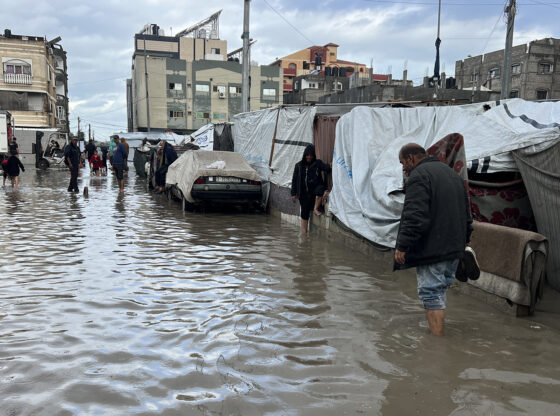
He explains that when bullets were ringing out at Bondi Beach during a Jewish celebration of Hanukkah, leaving 15 people dead in a shocking attack that shook Australia and the world, another image was playing in the background without cameras, Levy says, a picture of a Palestinian mother in Khan Yunis trying to sweep away the rain water that flooded her tent. She was screaming while her children were shivering from the cold in their shabby, torn clothes, but no one was listening to her, as the world had looked away to Sydney, he said.
Although the massacre there “deserved condemnation,” as the writer says, the condemnation turned into a tool of hypocrisy and double standards used to obliterate the endless flow of Palestinian blood. The global shock was immediate in Sydney, but it was completely absent from Gaza, where death has become normal news.
The article criticizes the Israeli government’s investment in political and propaganda attacks, from accusing foreign leaders, to alluding to the Mossad, all the way to employing “anti-Semitic” rhetoric to group Jews and Israelis into “one basket of persecution.”
The article adds a revealing touch when it stops at the “hero” who saved Jews during the attack, before it became clear that he was a Syrian Arab, which confused the prevailing narrative about the “innate violence of Muslims,” even if for a short moment. Israeli Prime Minister Benjamin Netanyahu even tried to talk about the “heroism of the Jews,” until embarrassing information about the identity of Ahmed Al-Ahmad emerged.
Levy points out that the discussions quickly returned to accusations of anti-Semitism, even though the perpetrators of the attack belonged to ISIS, Iran’s arch enemy, which disrupted even the discourse of holding Tehran responsible. Here the writer launches his most bitter sentence: “What a loss if the perpetrators had been Palestinians… the propaganda would have been easier and the gains would have been greater.”
There were two killers in Bondi Beach, as the writer says, but in Gaza, an entire country and army stand behind the massacres, where at least 36 people, including 18 children, were killed in a raid launched by Israeli forces last May on a school in Beit Hanoun, and that was only one massacre among many similar massacres in the Strip.
While the Palestinians stare from their collapsed tents at a world preoccupied with distant trauma, as Levy says in his final paragraph, what happened remains the embodiment of the ugliest images of double standards: blood considered a cosmic tragedy, and other blood left to dry in silence.