


In the first minutes of a short but devastating war, Israel crossed a line that it had avoided crossing for decades: the public assassination of Iran’s top nuclear scientists, as part of a coordinated and comprehensive military and intelligence attack.
An investigation conducted by the Washington Post in conjunction with the “Frontline” investigative program of the American television network (PBS) reveals how this campaign, which bore the code name “Operation Narnia”, was meticulously planned, politically managed, and executed with calculated brutality.
Read also
list of 2 itemsend of list
Last June, Israel launched a broad military and intelligence campaign against Iran, combining air strikes, secret ground operations, and precise assassinations, with the aim of crippling the Iranian nuclear program.
This operation was not just an extension of the broader “Rising Lion” air campaign that Israel launched last June 13 against Iran with more than 200 combat aircraft, but rather it was its beating strategic heart.
At the time, Israel considered the operation a “preventive strike” that protected it from “the existential threat posed by the Iranian nuclear program,” noting that Tehran “developed ballistic missiles capable of carrying nuclear warheads and striking Israel in minutes,” while Iran considered it a “dangerous aggression” and a “war crime,” and described it as a “declaration of war” requiring a strong response.
Decapitation strategy
The Washington Post explains in its investigative report that while the world was watching the sky to see columns of smoke rising from uranium enrichment facilities in Iran, there was a more precise and lasting war being carried out inside residential buildings in Tehran.
This was “Operation Narnia,” a calculated campaign by Israeli intelligence to eliminate Iran’s most prominent nuclear scientists, who Israeli and American officials believed formed the backbone of any future attempts by Tehran to build an atomic bomb.
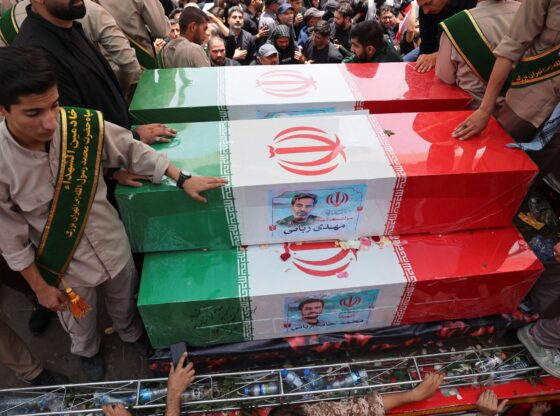
The operation began in the early hours of June 13, 2025, with the start of the 12-day Israeli-Iranian war. Israeli weapons targeted residential buildings in Tehran, killing prominent nuclear physicists and engineers inside their homes.
Among the first dead were Mohammad Mehdi Tehranji, a theoretical physicist and explosives expert subject to US sanctions, and Fereydoun Abbasi, the former head of the Iranian Atomic Energy Organization, who had survived an assassination attempt in 2010. Israel later announced that it had assassinated 11 prominent nuclear scientists during the first day and the following days.
These assassinations came as part of a broader campaign dubbed “Rising Lion,” targeting Iranian nuclear facilities, missile infrastructure, air defenses, and military leaders.
Israeli and American officials said that the goal of Operation “Rising Lion” was not only to destroy the facilities, but to set the nuclear program back years by eliminating what the Washington Post calls the “brain pool,” that is, a generation of scientists believed to have the knowledge necessary to turn enriched uranium into a practical nuclear weapon.
Israeli and American officials said that the goal was not only to destroy the facilities, but to set the nuclear program back years by eliminating what the newspaper calls the “brain pool,” that is, a generation of scientists believed to possess the knowledge necessary to transform enriched uranium into a practical nuclear weapon.
The joint investigative report revealed that Israel has been preparing for this moment for years. Its intelligence services spent decades collecting meticulous files on senior Iranian nuclear scientists, including their research, daily movements, homes, and social networks.
From an initial list of 100 scientists, the targets were narrowed down to about a dozen people who were deemed irreplaceable in the near term.
Unlike previous assassinations that were carried out in secret with official denial, this time Israel came out in the open. Officials attribute this to increased confidence after years of striking “Iranian proxies”, led by the Islamic Resistance Movement (Hamas) in the Gaza Strip and Hezbollah in Lebanon, in addition to the collapse of Bashar al-Assad’s regime in Syria, a strategic ally of Tehran.
However, the operation resulted in significant civilian casualties. The Washington Post and the online investigative website Bellingcat documented the killing of at least 71 civilians in five strikes targeting nuclear scientists.
In residential buildings in Tehran known as the “Professors’ Complex,” 10 civilians were killed, including a two-month-old infant. In another strike, it targeted nuclear scientist Muhammad Redha Siddiqi Saber, but it failed because he was not at home at the time. However, it resulted in the killing of his 17-year-old son.
Israeli officials claimed that they made every effort to minimize collateral damage, but acknowledged the dangers associated with targeting people residing in civilian neighborhoods.
The joint investigative report confirmed that Israel has been preparing for this moment for years. Its intelligence services have spent decades collecting meticulous files on top Iranian nuclear scientists. From an initial list of 100 scientists, the targets were narrowed to about a dozen people who were considered irreplaceable in the near term.
For its part, Iran accused Israel of deliberately targeting civilians, and announced the killing of more than a thousand people, while Israel said that Iranian counter-strikes killed 31 Israelis and hit civilian facilities.
Intelligence assessments – according to the newspaper – indicate that the damage was significant but inconclusive, as American and Israeli officials and the International Atomic Energy Agency agree that the Iranian nuclear program has gone back years, but it has not been destroyed.
The Washington Post confirms that Iran still possesses about 900 pounds of uranium enriched by 60%, a rate close to the level of military use, and that IAEA inspectors were prevented from accessing key sites after the war.
Diplomatic trick
Perhaps the most revealing aspect of the investigative report is the level of collusion between Israeli Prime Minister Benjamin Netanyahu and the administration of US President Donald Trump.
The newspaper reported that the war was preceded by months of diplomatic maneuvers and deception. Netanyahu presented Trump with 4 scenarios for an attack on Iran, ranging from a single Israeli strike to complete American command.
Despite Trump showing his preference for a diplomatic solution, the two sides continued joint planning and exchanging intelligence information, while deliberately promoting apparent differences between the two men to deceive Tehran.
Despite Trump showing his preference for a diplomatic solution, he and Netanyahu continued joint planning and intelligence sharing, while deliberately promoting apparent differences between the two men to deceive Tehran.
The report also revealed that the nuclear talks that were scheduled for last June 15 were nothing but a “deception” to keep the Iranian leadership unprepared.
Even as the bombing began, the United States sent a “final offer” through Qatari mediators with impossible conditions that included lifting all sanctions in exchange for dismantling the enrichment facilities and stopping support for armed groups in the region, which it rejected, and then direct American military participation began after Trump agreed to deploy B-2 Spirit bombers to strike the fortified underground “Fordo” facility.
Geopolitical motivation
There are events in the region that the newspaper described as a “perfect storm” that it believes encouraged Israel to strike Iran. The first event was the collapse of Bashar al-Assad’s regime in Syria in 2024, cutting off Iran’s main land corridor into its arms.
The second event led – according to the newspaper’s claims – to the “dismantling” of Hezbollah in Lebanon and Hamas in Gaza, leaving Iran without its traditional “deterrents.” After the killing of Hezbollah Secretary General Hassan Nasrallah in late 2024, and the destruction of Russian S-300 air defense systems, Israeli generals felt they had a unique “operational opportunity” to finish the mission without fear of devastating retaliation.
Despite the massive scale of destruction suffered by Iran, the long-term success of the campaign remains a matter of debate, in the opinion of the American newspaper. The Institute for Science and International Security in Washington described the damage to nuclear facilities – such as Natanz and Isfahan – as “catastrophic.”
The Director of the International Atomic Energy Agency, Rafael Grossi, confirmed that Iran’s physical ability to refine uranium has been severely damaged. However, Tehran remains committed to its position.
In its report, the Washington Post quoted Ali Larijani, Secretary of the Iranian Supreme National Security Council, as saying that his country’s Iranian nuclear program cannot be destroyed. Knowledge – as he emphasized – cannot be erased by bombs.
As Iran begins to rebuild and expand underground facilities, the investigative report concludes that the Israeli and American strikes may have delayed Iran’s nuclear ambitions, but they did not solve the essence of the problem, but rather they may have contributed to making its return more secretive and fortified in the future.