

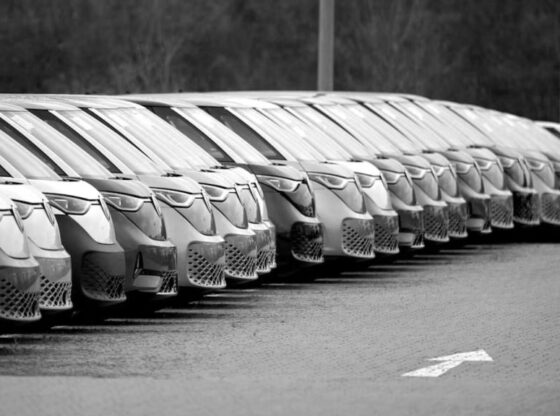

The European Commission has stepped on the brakes and changed the course of the climate and energy policies planned for the coming decades.
What just two years ago was celebrated in Brussels as the definitive milestone of decarbonization (the end of the sale of internal combustion cars by 2035) has become a dead letter this week.
The proposal of the Community Executive to mitigate the requirement to reduce emissions from 100% to 90%, allowing in fact the survival of combustion enginesit is not a simple technical adjustment.
It is an explicit recognition that the green roadmap, as it was designed, collided head-on with the industrial and social reality of the continent.
This 180-degree turn, orchestrated by the president Ursula von der Leyen Under pressure from its own political family, the European People’s Party (EPP), it marks the end of a period characterized by regulatory idealism that often ignored the real capabilities of the market.
Stubborn reality has ended up imposing itself on legislative utopia.
The data is undeniable. The stagnation in the sale of electric vehicles, unable to penetrate the mass market due to their high price, and the structural crisis of giants such as Volkswagen, which is facing historic plant closures in Germany, have set off all the alarms.
Europe has belatedly understood that it cannot legislate against its own industry nor impose a transition that the European middle class cannot afford.
Brussels’ decision represents the victory of economic pragmatism over the more rigid climate positions, defended by Spain and France, against the pragmatism of Germany, Italy and the EPP.
The European Union, which during the last legislature established itself as the global vanguard of the fight against climate change, has had to accept that environmental sustainability cannot be built on the ruins of industrial competitiveness.
The Chinese threat whose manufacturers flood the market with subsidized electric vehicles at unbeatable priceshas forced us to redefine priorities. The urgency is no longer just to save the planet, but also to save the European productive fabric and the millions of jobs that depend on the automotive industry.
On this board reconfigured by the Berlin-Rome axis, the figure of the Spanish president, Pedro Sanchezhas been blurred, evidencing a worrying political loneliness in the corridors of Brussels.
The letter sent by Sánchez to Von der Leyen on December 11, imploring to maintain the 2035 veto under the pretext of “legal certainty” for the investments already made, has been ignored with a diplomatic coldness that illustrates the loss of influence of the Spanish position.
Moncloa’s miscalculation has been twofold.
First, not anticipating that the wind in Europe had changed direction, going from Green Deal to the imperative of economic security.
Second, cling to a green orthodoxy that even its original promoters, the Germans, have abandoned in the face of the evidence of numbers.
While Spain defended the rigidity of the calendar, Germany and Italy forged an alliance to make it more flexible, protecting national interests that Pedro Sánchez has despised in exchange for the support of radical parties that defend economic policies of degrowth and destruction of the productive fabric.
But the EU’s shift should not be read as a renunciation of decarbonization, but rather as a necessary correction.
The energy transition remains unavoidable, but the lesson of this December 2025 is clear. Climate objectives must keep pace with technology, the economy and society.
Trying to force the march by setting unrealistic objectives only leads to industrial melancholy and citizen rejection. Europe has finally chosen the path of realism.