


Women’s exhibitions triumph among our critics. Six of the most voted are women’s monographs, perhaps due to the care taken when inscribing them in new and shiny pages of history. The anniversary of Rauschenberg’s birth and the echoes of the centenary of the Surrealist manifesto by Breton, which still resonate, have marked a year in which the classics have triumphed: mirrors, after all, of who we are.
Consultation here the votes of our critics.
1. Maruja Mallo. Mask and compass
Reina Sofía Museum, Madrid, and Centro Botín, Santander
2025, without a doubt, will be the year of Maruja Mallo. Eccentric character who is only defined by metaphors: cross between firefly and centipede, young witch with the face of a bird, submerged swimmer, monster and tragedy… Much has been written about Ana María Gómez González (Viveiro, 1902 – Madrid, 1995). Dalí stated that he was “half angel, half shellfish,” and Lorca said that his painting contained “all the imagination, emotion and sensuality in the world.”
The most voted exhibition, by far, by our critics recognizes the figure of the painter and set designer to a precursor of feminism, ecology, magic and esotericism; of the brotherhood between races and peoples, and the fluidity of identities. He was a fundamental part of the Generation of ’27, along with Rafael Alberti, Salvador Dalí, Federico García Lorca, María Zambrano, Luis Buñuel and Rosa Chacel.
The exhibition shines the pictorial filigree that he developed with absolute professionalism, neatness and mastery throughout his career, in a complete review of his most important periods: from his training at the Academy of Fine Arts of San Fernando, where he founded the collective Las Sinsombrero (a movement that was born from a gesture of rebellion together with Margarita Manso, Dalí and Lorca when he took off his hat in Puerta del Sol questioning the conventions of the time), to his most extensive period: his emigration to Buenos Aires during the Civil War and his South American journey.
A necessary story, curated by Patricia Molins, that rewrites the history of art and that you still have time to visit: at the Reina Sofía Museum, until March 16.
View of the exhibition. Photo: Dolores Iglesias Fernández / Juan March Foundation Archive
2. Robert Rauschenberg. The use of images
Juan March Foundation, Madrid
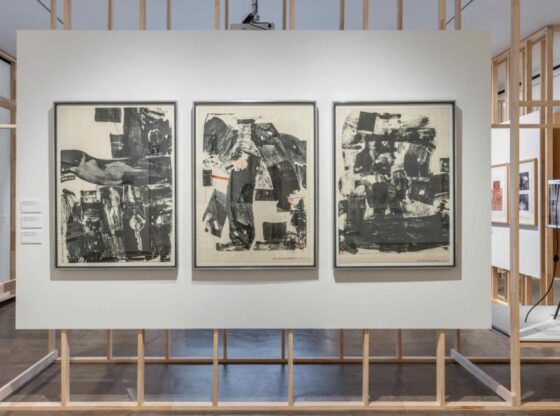
An exhibition with a vibrant montage, full of rhythm, light, agile, with good pieces, and that also celebrates the centenary of the birth of this unclassifiable artist. Robert Rauschenberg (1925-2008) freely experimented with images from photography, collage, contemporary dance and painting.
As José Jiménez wrote in connection with the inauguration, “given the diversity of expressive media and supports used by the artist, the center of the exhibition, as can be seen from its title, is the role that images play as the nucleus of plurality that always predominates in his works.”
This appropriation of images was enormously novel: on the one hand, it was accompanied by a singular development of artistic techniques; On the other hand, the way in which he used them was based on a lack of hierarchy close to its concept of random order (random order), which the artist reflected on in the early sixties.
Rauschenberg opened his artistic horizon from photography to abstract expressionism. A delightful exhibition at the Juan March Foundation which, by the way, already organized its first exhibition in Spain in 1985 and which can be seen until January 18.
View of the exhibition. Photo: Francis Tsang
3. Warhol-Pollock and other American spaces
Thyssen-Bornemisza Museum, Madrid
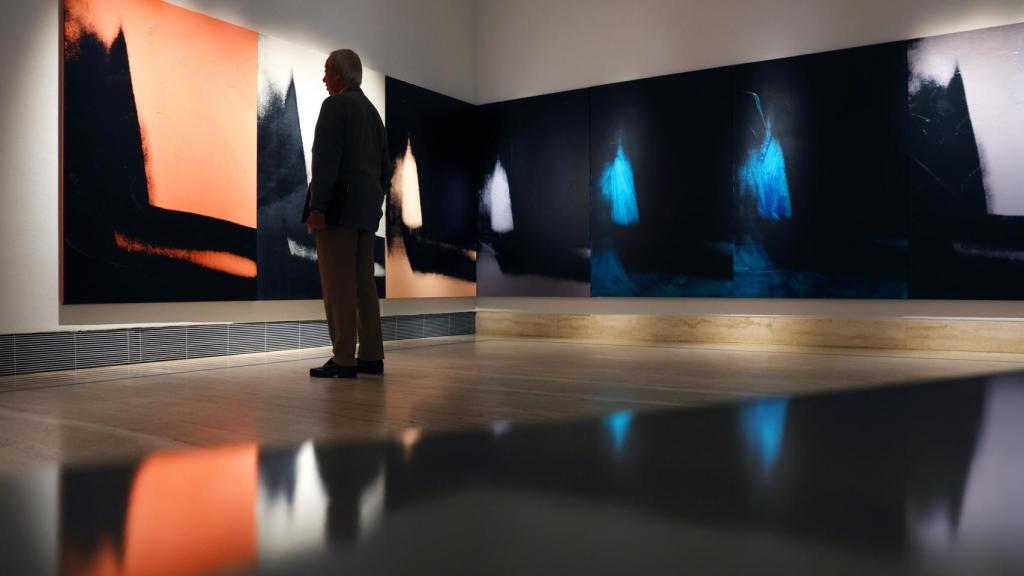
Jackson Pollock died in a car accident one afternoon in August 1956 and his death represented the end of an era. He was the last damned one: overcome by the media pressure of being “the greatest painter in the United States,” according to Clement Greenberg, or of having made – as Piet Mondrian maintained – “the most impressive painting I have seen in a long time.”
This unexpected death shocks a young Andy Warhol, and the entire United States, and, although he already worked in the advertising sector, Jackson’s life and, above all, his work inspire him to experiment with new forms of artistic expression. A lucid Estrella de Diego curated this exhibition, which accompanies us through the different stages and influences – even though they may seem antithetical – that the abstract expressionist exercised the father of pop artwith historical loans whose transfers have been achieved with great difficulty, as she herself told us in the exhibition halls.
A fertile dialogue between two great art stars who have reinvented the pictorial space of contemporaneity and who are accompanied by other figures, women artists, such as Marisol, Helen Frankenthaler or Audrey Flack. Until January 25.
View of the exhibition. Photo: Reina Sofía Museum
4. Marisa González. A generative way of doing
Reina Sofia Museum, Madrid
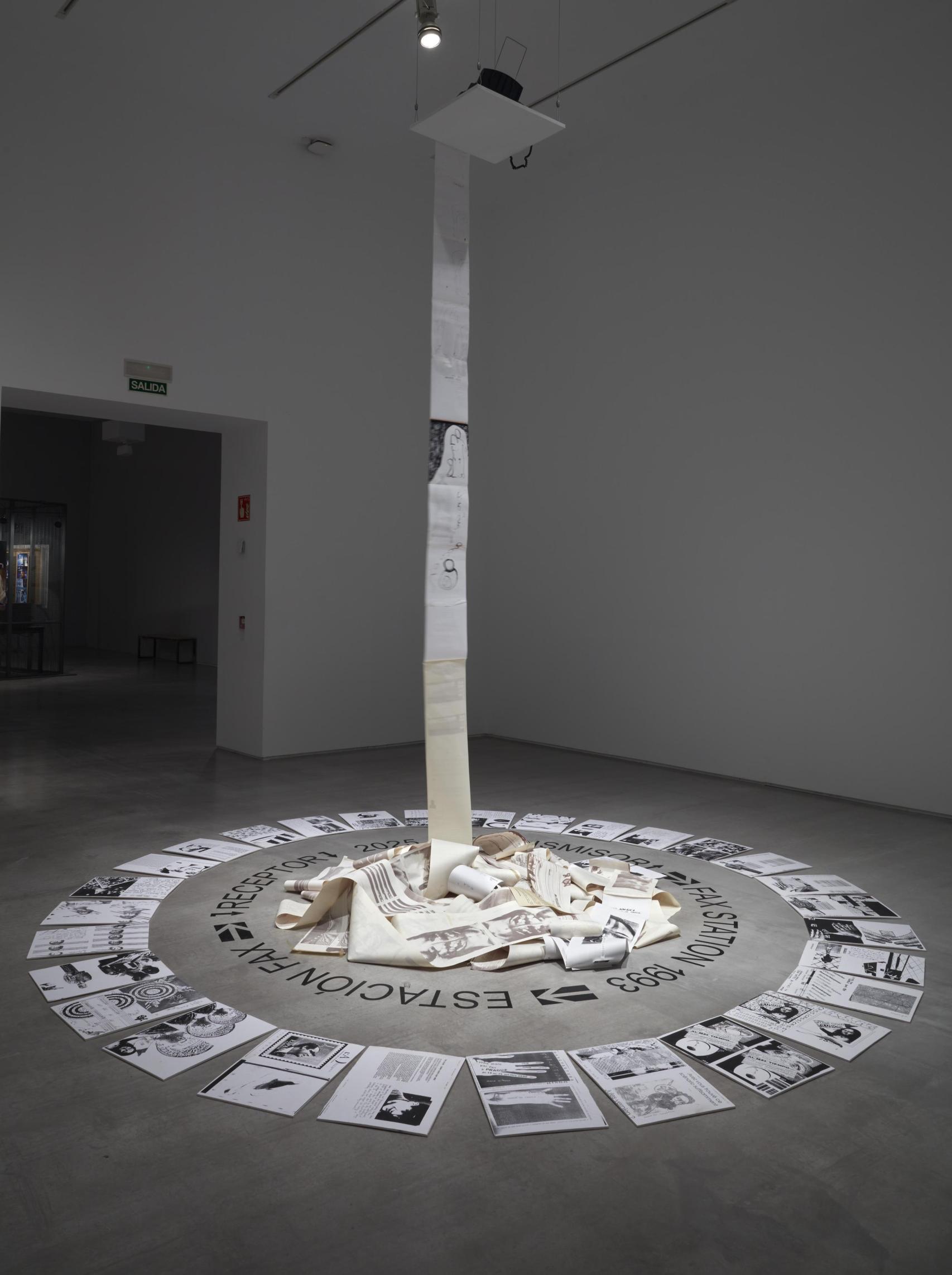
The day of the blackout (it seems like a million years ago) we interviewed this artist, pioneer in research between art and technology. We talked about the retrospective dedicated to him on the occasion of the 2023 Velázquez Prize and about the complex task of selecting work from more than fifty years of artistic production.
The work of the curator, Violeta Janeiro, stands out, since what Marisa González (Bilbao, 1943) treasures in her studio in the center of Madrid is immeasurable: images printed with the first faxes, media archaeology, photographs and instruments collected from the Lemóniz nuclear power plant and the record of a mutant lemon tree. “If something is born and smells of the future, I’ll jump in,” he said.
Barbara Kruger: ‘Untitled (Forever)’, 2017/2025. Photo: Barbara Kruger and Sprüth Magers
5. Barbara Kruger. Another day, another night
Museo Guggenheim, Bilbao
Las Differences in class, power and consumption underpin the work of this iconic creatortrained in the design department of magazines like Mademoiselle, where she learned the importance of the attention economy. Caustic and close, seductive but implacable, Barbara Kruger (Newark, New Jersey, 1945) is armed with black and white photographs and sharp phrases in Futura Bold and Helvetica Ultra Compressed, on red backgrounds.
Sentences with which he has dissected, for more than half a century, the choreographies of power. The exhibition, which conquered the museum’s architecture with dazzling dimensions, drank from literature, from advertising slogans or from aphorisms.
Installation view. Photo: Matadero Madrid / Fernando Tribiño
6. Cristina Mejías. Language in chorus, count
Ship 0 Matadero, Madrid
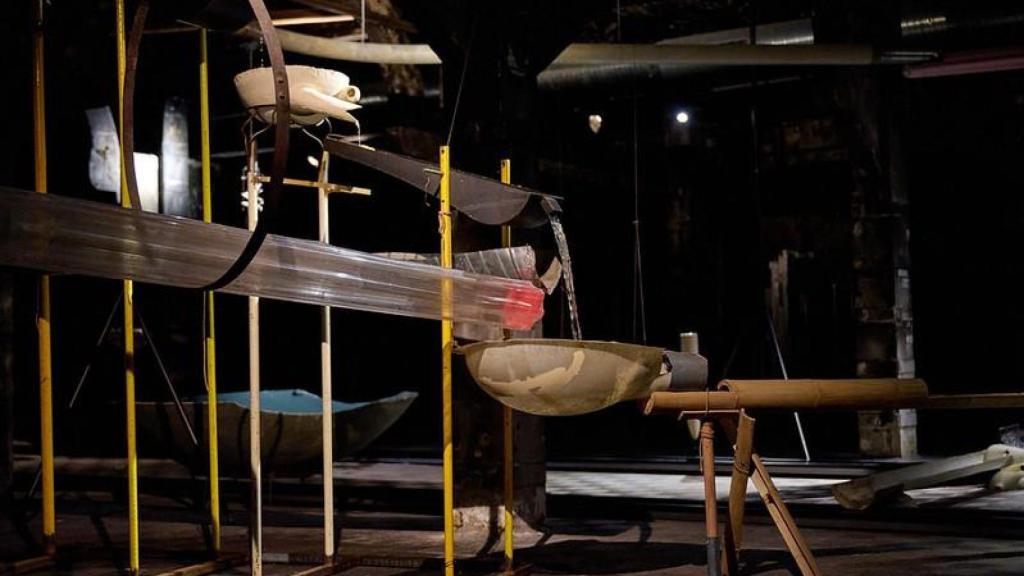
A spectacular installation that imagines and draws the course of water. Modular, dynamic, kinetic, disturbingly alive, at times reminiscent of the videos of Fischli & Weiss, where a circuit of random objects caused chain reactions; also to Tinguely’s self-destructive machines or Duchamp’s wasted energy as he transports us to an Andalusian patio.
Cristina Mejías (Jerez de la Frontera, 1986) had to install the modules on a soccer field to test the drift of the pipelines. Until February you can come to Matadero to listen to the sound of water and let yourself be hypnotized by the resonances of the materialsthe waterfalls and the drips.
Juan from Aguirrego: ‘Who keeps the zoo?’, 2025. Photo: Sue Ponce / Juan Pérez from Aguirrego. VEGAP, Madrid, 2025
7. Juan Pérez Agirregoikoa. War, trade and philanthropy
CA2M, Mostoles, Madrid
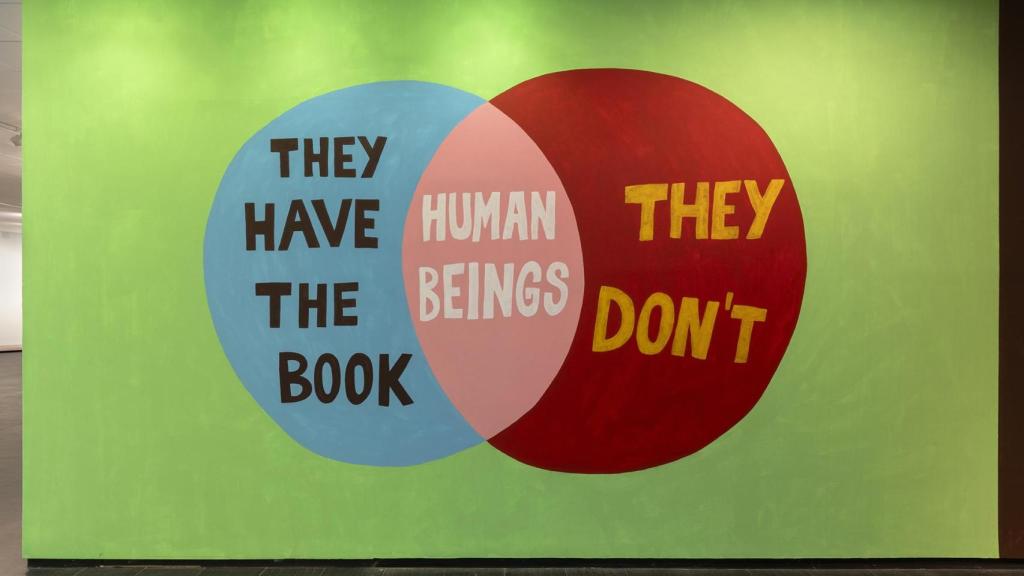
Jokes like daggers, cowboys on the tightrope like democracies about to crumble, tigers queer lovers of books and butterflies, dancing clowns who draw swastikas with their legs. That is the fantastic universe of Juan Pérez Agirregoikoa (San Sebastián, 1963), which we can enjoy until January 11 at the CA2M.
His last five years of work, turned into a fierce criticism –although formally beautiful, full of bright colors, cute animals and blurred backgrounds– to the forms of cultural and political consumption in the West.
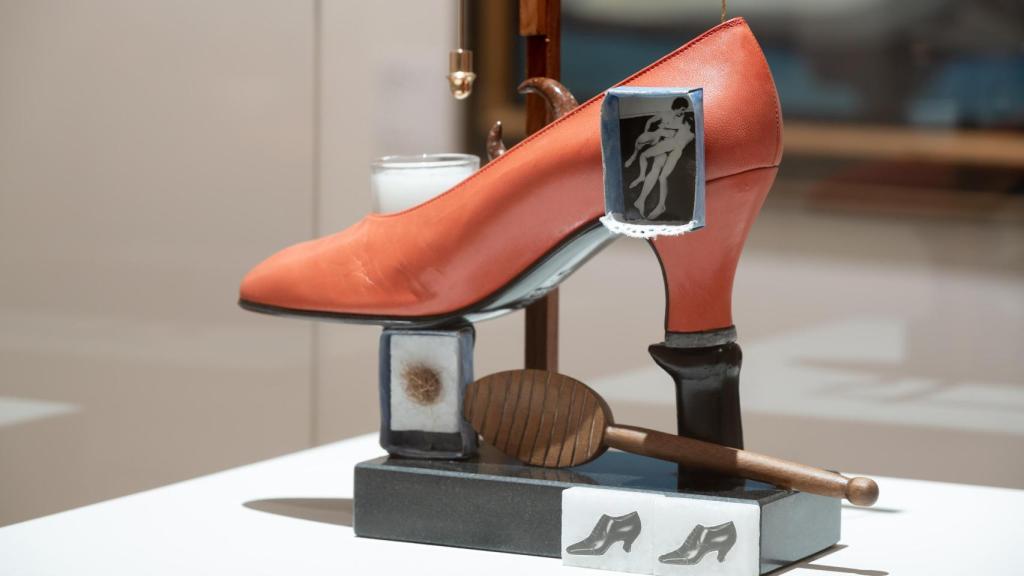
Salvador Dalí: ‘Eschatological object with symbolic functioning (The Gala Shoe)’, 1931/1973 Center Pompidou, Musée National d’Art Moderne, Paris. Acquisition with the participation of the Fonds du Patrimoine, 2014 inv. no.: AM 2014-50 © Center Pompidou, MNAM-CCI, Dist. GrandPalaisRmn / Georges Meguerditchian
8. 1924, other surrealisms
Mapfre Foundation, Madrid
An exhibition from the beginning of the year but one that made a dent in the memory of our critics. José María Parreño wrote here about this dazzling exhibition, which brought together more than 200 works from 65 public and private collectionshighlighting the “great achievement of the commissioner.”
Estrella de Diego has arranged them in an original and credible discourse, which makes each work shine by placing it in a constellation.” A very complete cartography of surrealism inaugurated shortly after the centenary was celebrated, last year, of the Surrealist manifesto by André Breton. An encyclopedic and very complete project.
Tarsila do Amaral: ‘Obreros’, 1933. Photo: State of São Paulo / Romulo Fialdini
9. Tarsila do Amaral. Painting modern Brazil
Museo Guggenheim, Bilbao
Tarsila do Amaral (Capivari, São Paulo, 1886 – São Paulo, 1973) is one of the essential painters in construction of the imaginary of modern Brazil and she has been the creator of a new syncretistic mythology where she fuses the indigenous, the Afro-descendant and the Portuguese heritage together with cubism and the European avant-garde movements, in addition to leading the Brazilian anthropophagic movement.
The Guggenheim exhibition covered, in a complete retrospective that came from the Grand Palais in Paris, 150 pieces that were structured between the atavistic and the most rabid modernity.
Chantal Akerman: ‘From the East, on the edge of fiction’, 1995. Foto: Chantal Akerman Fdn. / Marian Goodman Gallery
10. Chantal Akerman. Face the image
Museum of Arts, Vitoria.
A continuation of the Vicereina of Barcelona project that delved into the work of the important Belgian director Chantal Akerman (1950 -2015). Fernando Golvano described the exhibition as “a story stripped of artifice open to chance and to our perception in the spatial device of the installations that we tour, in a succession of rooms where images and texts overlap”.
Without a script, attentive to the process of each shot and each montage, this exhibition makes visible their disputes in everyday existence and in the spaces that host the extraordinary.